



Sodium Channel
Na channels; Na+ channels
Sodium channels are integral membrane proteins that form ion channels, conducting sodium ions (Na+) through a cell's plasma membrane. They are classified according to the trigger that opens the channel for such ions, i.e. either a voltage-change (Voltage-gated, voltage-sensitive, or voltage-dependent sodium channel also called VGSCs or Nav channel) or a binding of a substance (a ligand) to the channel (ligand-gated sodium channels). In excitable cells such as neurons, myocytes, and certain types of glia, sodium channels are responsible for the rising phase of action potentials. Voltage-gated Na+ channels can exist in any of three distinct states: deactivated (closed), activated (open), or inactivated (closed). Ligand-gated sodium channels are activated by binding of a ligand instead of a change in membrane potential.
Sodium Channel Isoform Specific Products
-
Sodium Channel
(628)
View all products
-
Nav1.1
(11)
View all products
-
Nav1.2
(16)
View all products
-
Nav1.3
(14)
View all products
-
Nav1.4
(14)
View all products
-
Nav1.5
(21)
View all products
-
Nav1.6
(12)
View all products
-
Nav1.7
(62)
View all products
-
Nav1.8
(41)
View all products
-
Nav1.9
(2)
View all products
All Product Categories
-
Sodium Channel Inhibitors
(619)
View all products
-
Sodium Channel Agonists
(10)
View all products
-
Sodium Channel Antagonists
(30)
View all products
-
Sodium Channel Activators
(35)
View all products
-
Sodium Channel Modulators
(30)
View all products
-
Sodium Channel Controls
(5)
View all products
-
Sodium Channel Ligands
(3)
View all products
-
Sodium Channel Related Products (802)
Related Products (802)

-
Antibodies (9)
-
Related Compound Screening Libraries (1)
-
Sodium Channel Isoform Comparison
-
AZD-1305
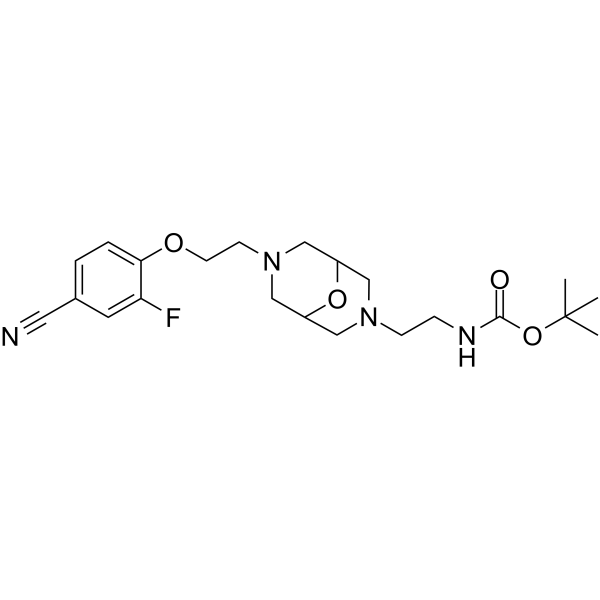 0 ImagesCat. No.: HY-111245CAS No.: 872045-91-5AZD-1305 is an antiarrhythmic agent and atrial selective sodium channel/potassium channel blocker, which can significantly prolongs action potential duration and reduces excitability, cause atrial selective ERP prolongation and acute termination of atrial fibrillation. AZD1305 can be used for atrial fibrillation research.
-
Nav1.8-IN-20
 0 ImagesCat. No.: HY-174845CAS No.: 3024470-62-7Nav1.8-IN-20 (Compound I) is an orally active and potent voltage-gated sodium channel Nav1.8 inhibitor with an IC50 value of 14 nM. Nav1.8-IN-20 blocks the generation and conduction of action potentials in peripheral nociceptive neurons, exerting analgesic effects. Nav1.8-IN-20 is promising for research of various pain types such as acute pain, chronic pain, inflammatory pain, and neuropathic pain.
-
Nav1.7 blocker 1
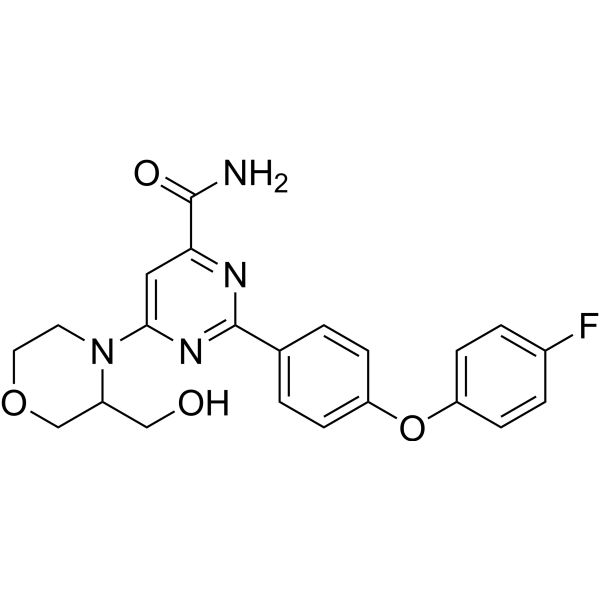 0 ImagesCat. No.: HY-160663CAS No.: 1426336-36-8Nav1.7 blocker 1 (example 41) is a Na+ channel (Nav) blocker with an IC50 value of 0.037 μM. Nav1.7 blocker 1 can be used for the study of pain, including neuropathic pain, postoperative pain, inflammatory pain, and so on.
-
BL-1021
 0 ImagesCat. No.: HY-115359CAS No.: 1002331-76-1BL-1021 is an orally active ion channel blocker. BL-1021 significantly reduces symptoms of neuropathic pain without noticeable sedation or cardiac arrhythmias. BL-1021 can be used in the research of acute and chronic pain.
-
ERG-IN-7
 0 ImagesCat. No.: HY-184190ERG-IN-7 is a Nav1.5, Cav1.2 and Kv11.1 inhibitor with IC50 values of 10.34 μM, 21.01 μM, and 16.385 μM for human Nav1.5, Cav1.2, and Kv11.1, respectively. ERG-IN-7 prolongs action potentials, reduces conduction velocity, and restores cardiac function. ERG-IN-7 can be used for the research of ventricular arrhythmia.
-
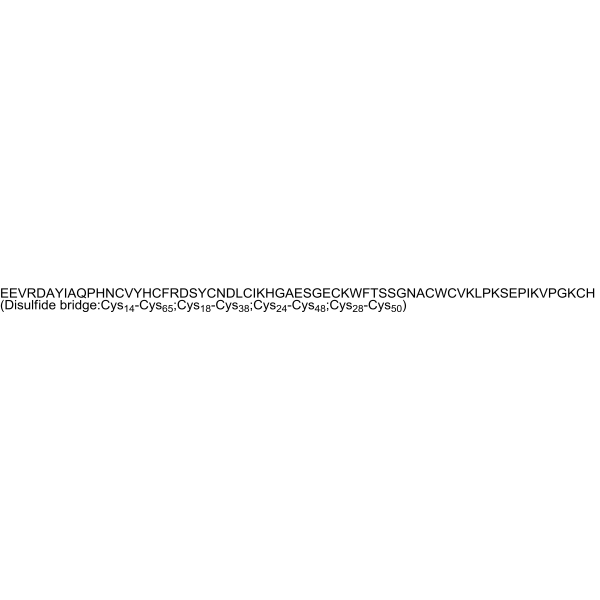
Pterinotoxin-2
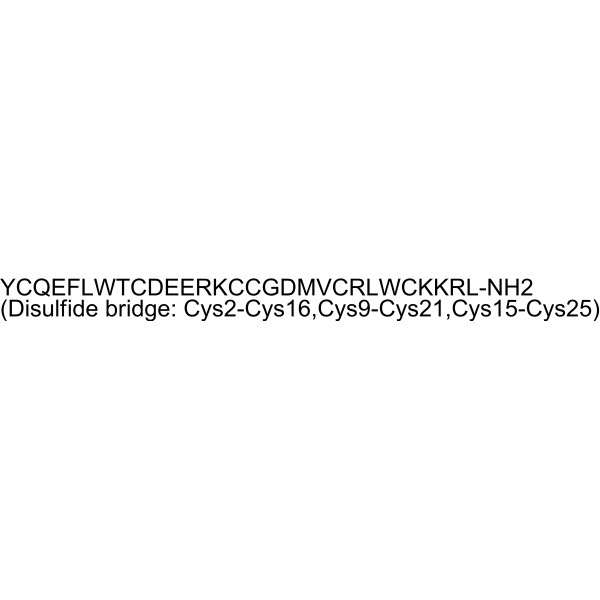 0 ImagesCat. No.: HY-P5942Pterinotoxin-2 is a sodium channel inhibitor peptide toxin.
-
Eslicarbazepine acetate-d4
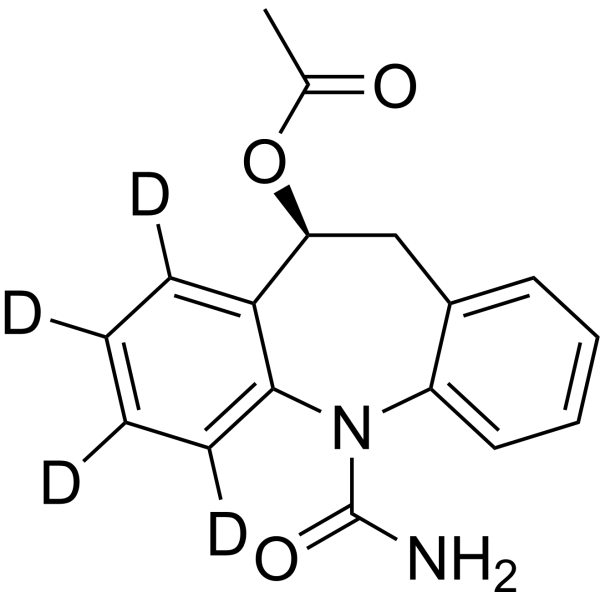 0 ImagesCat. No.: HY-B0703SSynonyms: BIA 2-093-d4Eslicarbazepine acetate-d4 is deuterated labeled Eslicarbazepine acetate (HY-B0703). Eslicarbazepine acetate (BIA 2-093), an antiepileptic agent, is a dual a dual Inhibitor of β-Secretase and voltage-gated sodium channel.
-
α-Dendrotoxin
 0 ImagesCat. No.: HY-P2707CAS No.: 74504-53-3Synonyms: α-DTXα-Dendrotoxin (α-DTX) is a voltage-gated K+ channel blocker and an acid-sensing ion channel (ASIC) inhibitor. α-Dendrotoxin blocks Kv1.1, Kv1.2, Kv1.6 and D-type (ID) voltage-gated K+ channels, and reversibly inhibits slowly inactivating potassium currents. α-Dendrotoxin induces epilepsy-related behaviors in mice. α-Dendrotoxin can be used in studies related to tonic-clonic seizures.
-
Phrixotoxin 3 TFA
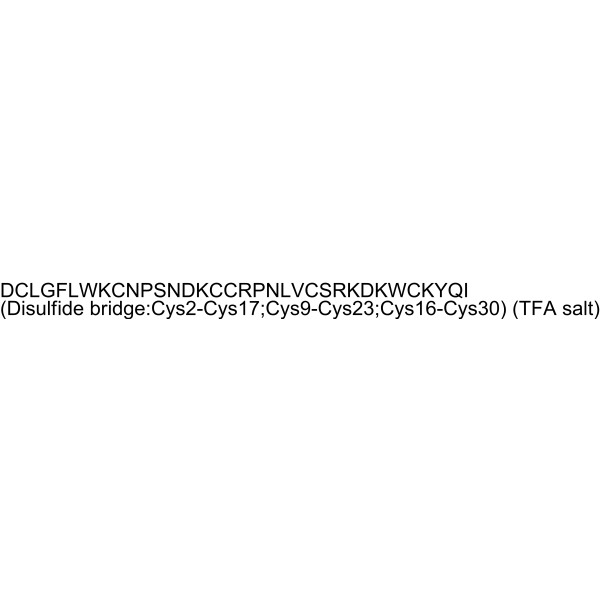 0 ImagesCat. No.: HY-P1218APhrixotoxin 3 TFA is a potent blocker of voltage-gated sodium channels, with IC50s of 0.6, 42, 72, 288, 610 nM for NaV1.2, NaV1.3, NaV1.4, NaV1.1 and NaV1.5, respectively. Phrixotoxin 3 TFA modulates voltage-gated sodium channels with properties similar to those of typical gating-modifier toxins, both by causing a depolarizing shift in gating kinetics and by blocking the inward component of the sodium current.

-
Nav1.8-IN-11
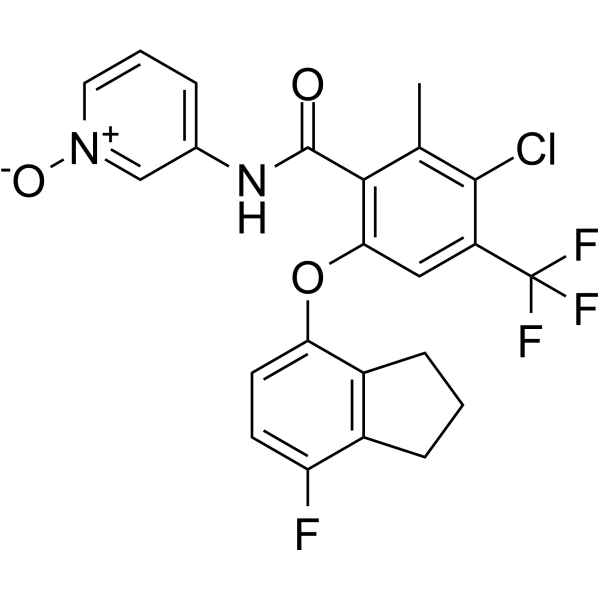 0 ImagesCat. No.: HY-160592CAS No.: 2990578-70-4Nav1.8-IN-11 (Example 1) is a Nav1.8 channel inhibitor with a IC50 value of 0.1 nM. Nav1.8-IN-11 can be used in the study of pain disorders.
-
Urotensin-II receptor antagonist-1
 0 ImagesCat. No.: HY-10672CAS No.: 1034708-07-0Urotensin-II receptor antagonist-1 (compound 1) is a low oral bioavailability (F=0-3%, rat) selective human Urotensin II receptor antagonist, Ki=16 nM (test on HEK293 cells expressing recombinant human UT receptor). Urotensin-II receptor antagonist-1 inhibits cytochrome P450 (IC50=0.75 μM, CYP2D6; 1.4 μM, CYP3A4), inhibits κ-opioid receptor (EC50=3.2 μM), targets cardiac sodium channels (Ki=2.5 μM).
-
L589420-0-2
 0 ImagesL589420-0-2 (L-420) is a sodium pump inhibitor with inhibitory activity in human erythrocytes. L589420-0-2 can regulate the concentration of intracellular sodium ions, thereby affecting the electrophysiological properties of cells. L589420-0-2 may also play an important role in the inhibition of cardiovascular diseases.
-
(S)-Lercanidipine
 0 ImagesCat. No.: HY-B0612BCAS No.: 185197-71-1(S)-Lercanidipine is a calcium channel blocker with antihypertensive and neuroprotective activities. (S)-Lercanidipine reduces oxidative stress and protects auditory sensory hair cells from noise-induced damage. (S)-Lercanidipine showed significant protective effects on cell viability in in vitro experiments, especially at low concentrations. (S)-Lercanidipine has been found to effectively reduce the hearing threshold of mice after noise stimulation and protect the survival of outer hair cells. The antioxidant properties of (S)-Lercanidipine are reflected in its increased expression of antioxidant enzyme genes and decreased expression of oxidative enzyme genes. (S)-Lercanidipine administration is effective in reducing noise-induced hearing loss both before and after noise exposure. (S)-Lercanidipine may alleviate noise-induced hearing loss and protect the survival of outer hair cells through its antioxidant mechanism.
-
Fosphenytoin-d10 disodium
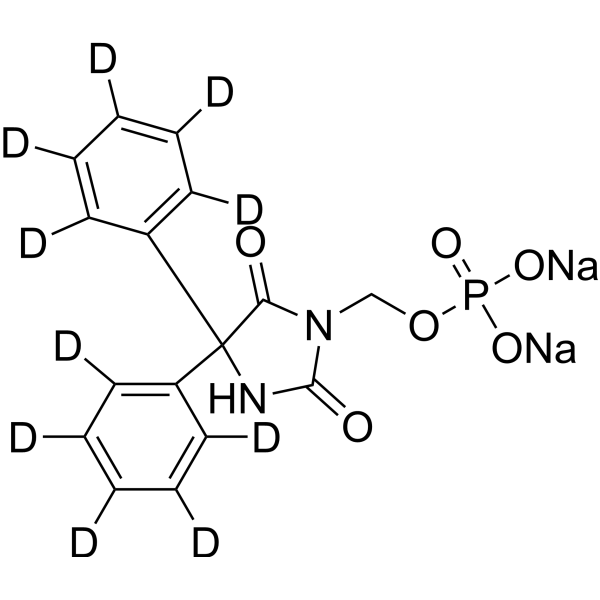 0 ImagesCat. No.: HY-B1657ASFosphenytoin-d10 (disodium) is deuterium labeled Fosphenytoin (disodium). Fosphenytoin sodium is a phenytoin proagent with similar anticonvulsant properties. Its main mechanism is to block frequency-dependent, use-dependent and voltage-dependent neuronal sodium channels, and therefore limit repetitive firing of action potentials.
-
Nifedipine hydrochloride
 0 ImagesCat. No.: HY-B0284ACAS No.: 60299-11-8Nifedipine hydrochloride is a potent vasodilator with calcium antagonist activity. Nifedipine hydrochloride is a useful antianginal compound that can also lower blood pressure. Nifedipine hydrochloride exhibits comparable antihypertensive properties to some new compounds, especially in calcium channel blockade. Nifedipine hydrochloride is used in biological activity studies to develop new antihypertensive and/or antianginal compounds.
-
Jasmolin II
 0 ImagesCat. No.: HY-W740651CAS No.: 1172-63-0Jasmolin II is an insecticide targeting voltage-gated sodium channels in insects. Jasmolin II leads to neuronal hyperexcitation and insect paralysis. Jasmolin II is promising for research of agricultural pests.
-
Etidocaine
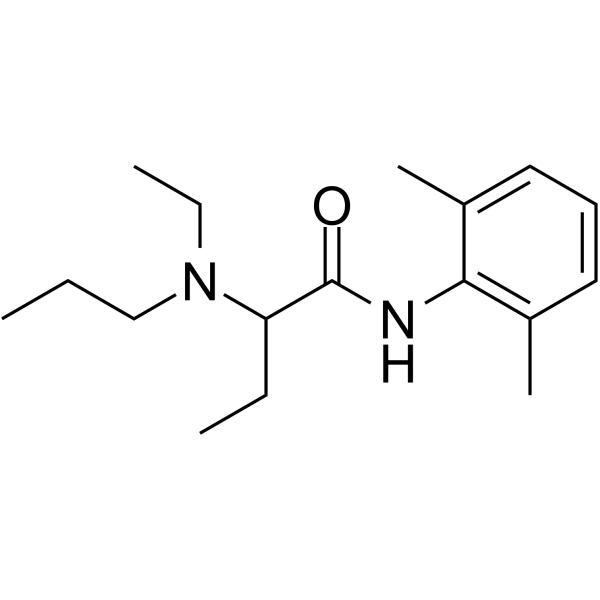 0 ImagesCat. No.: HY-B2080CAS No.: 36637-18-0Synonyms: EDCEtidocaine (EDC) is a long aminoamide local anesthetic.
-
Nav1.8-IN-13
 0 ImagesCat. No.: HY-161572CAS No.: 2785391-79-7Nav1.8-IN-13 (compound 16) is a Nav1.8 inhibitor (pIC50=7.9).




